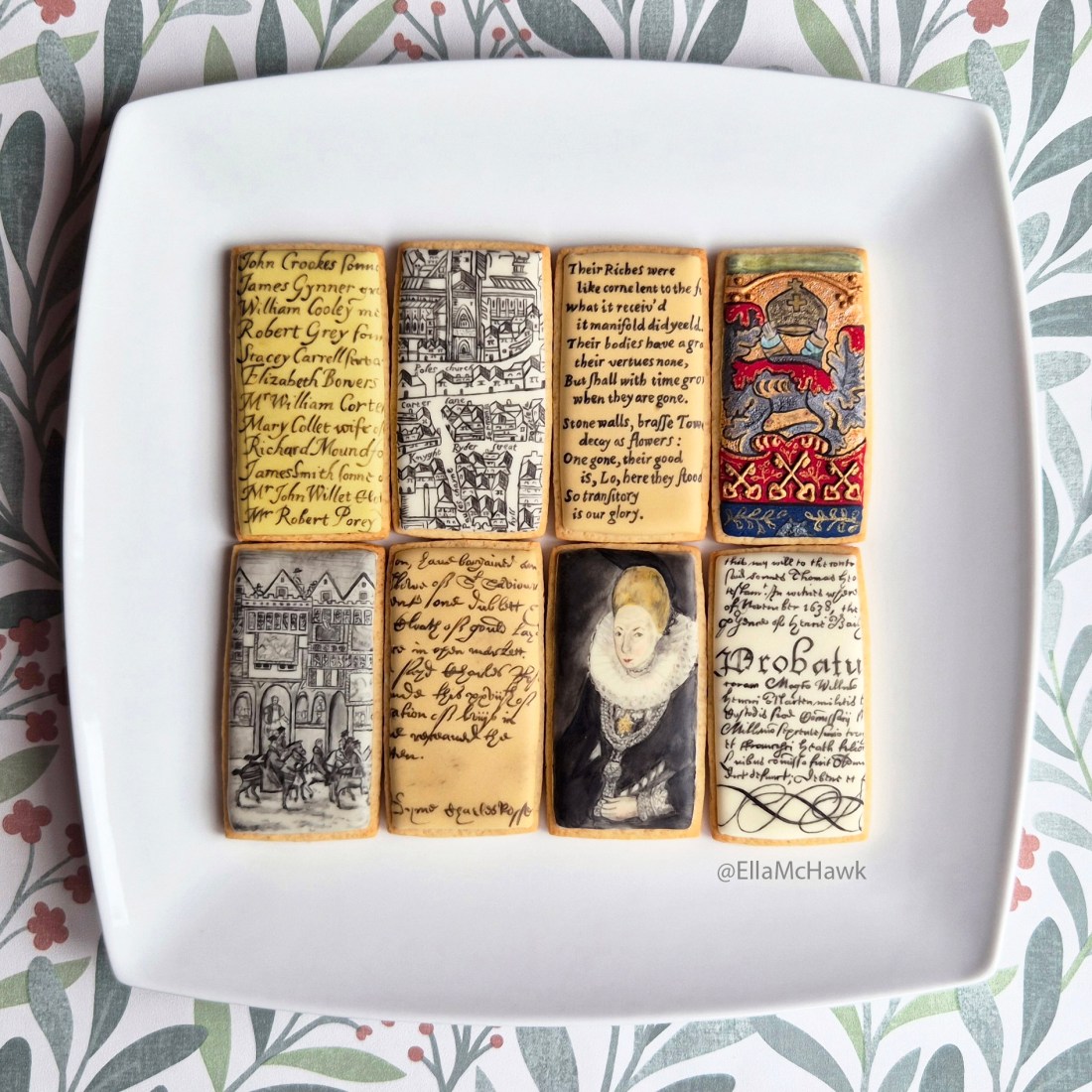
Biscuit (cookie) flavour: Almond and rose. Inspired by the flavour of marchpane, a historical form of marzipan.
Decoration: Royal icing base. Designs painted by hand using food colouring gels, edible lustres, and vodka, with relief details piped in royal icing.
Context: Created as a snapshot of my new research project, ‘Shakespeare’s Makers’, which explores the network of makers and traders that supplied costumes, props, and furniture to Elizabethan and Jacobean playing companies. Together with historian Dr Anouska Lester, I’m looking at 400-year-old documents like parish registers, livery company records, wills, and legal cases to show how integral tailors, clothworkers, merchants, and craftswomen were to the theatre industry of Shakespeare’s time.
This research is supported by the British Academy/Leverhulme Small Research Grants Programme.
The items depicted in this biscuit set include:
Top row (L-R)
- The parish register for Saint Mary Magdalen, Milk Street (1559-1653)
- The Agas Map of London (1561)
- John Stow’s Survey of London (1633)
- The Fishmongers’ Funeral Pall (c.1512-38), a richly embroidered textile piece used to adorn the coffins of members of the Fishmongers’ livery company. A close analysis of the pall is available here.
Bottom row (L-R)
- An anonymous 1809 engraving depicting Cheapside c.1547
- A receipt documenting the sale of clothing to Elizabethan theatre impresario Philip Henslowe
- A portrait of Dame Barbara Stone (c.1605), wife of Sir William Stone, Clothworker
- The will of Jane Heath (1638), wife of Richard Heath, Mercer

